
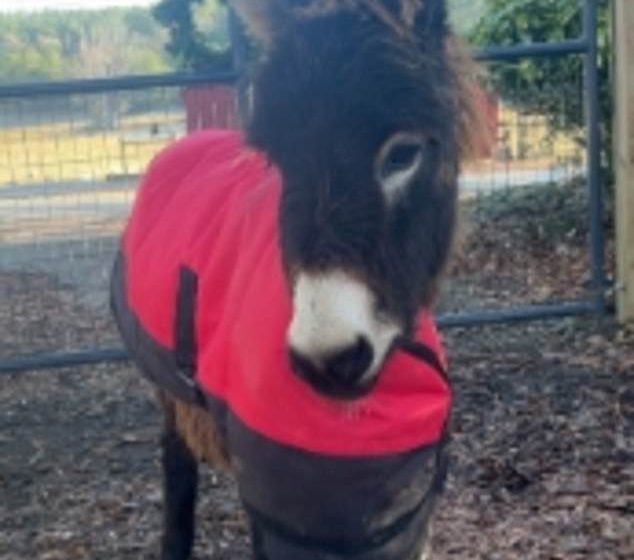

The officer who fired at HeeHaw wants the million-dollar lawsuit thrown out — and his filing leans on a doctrine most people have never heard of: open fields.
Cedartown officer Trenton Garner filed the motion on October 7, and it became public this week as national outlets picked up the case. His ask: dismiss Hannah Israel’s federal suit — filed in the Northern District of Georgia’s Rome division — with prejudice, and grant him qualified immunity. In the alternative, he wants the case converted to summary judgment after expedited discovery focused on the encounter itself.
The motion rests on three pillars. First, the open fields doctrine: the argument that even an enclosed pasture is not protected against warrantless entry the way a home is. Second, exigent circumstances — officers were searching for a missing twelve-year-old girl after midnight, with a drone and a police dog on the ground. Third, the force itself: the filing says Garner reasonably believed the miniature donkey posed an imminent threat to a fellow officer because HeeHaw was charging.
Then there is the bodycam problem. Garner’s camera was not actively recording at the moment he fired — only a silent, thirty-second rolling buffer survived. But the audio that exists captures a fellow officer asking why he fired at the animal. Garner’s answer on the recording: “I don’t know.” Not long after, he told dispatch the donkey had been trying to attack. The motion has to explain away its own footage.
The silent buffer shows the sequence in full. Two officers sweeping a dark pasture with flashlights. A small donkey stepping into the beam. Closing the distance. An officer backing away. Then HeeHaw, down in the light pool. Whether that reads as an imminent threat is exactly what a judge — or a jury — would have to decide.
The case has traveled far from northwest Georgia. Reason framed it as a qualified immunity test case, noting that “cases involving miniature donkeys are in short supply.” Axios covered it on October 19. What started as a farm family’s grief over a bottle-raised petting-zoo animal is now a national argument over how far the open fields doctrine stretches — and whether an officer can claim both an emergency and immunity in the same filing.
Israel’s complaint tells it differently: officers entered enclosed private property at night without a warrant or permission, and the donkey posed no threat. The suit alleges Garner acted “maliciously” and with “deliberate indifference” to her Fourth Amendment rights, and that no reasonable officer in his position would have considered the force necessary. So far, no response from Israel’s side to the motion appears on the public docket.
Garner remains on administrative leave while Cedartown PD’s internal review continues, and the Georgia Department of Agriculture’s law enforcement division has been conducting its own review. No criminal charge has been filed. The missing girl was found safe the same night — the outcome the search was for, achieved without the pasture ever needing to be entered, according to the family.
What happens next is in the court’s hands. If qualified immunity is granted, the case ends without a jury ever hearing it. If not, expedited discovery means the thirty silent seconds become the centerpiece — frame by frame, against Garner’s own “I don’t know.”