
Watch the full breakdown:
Related: Denver Golmon Hammond Cop Pleads Guilty To Unmasking A Federal Informant
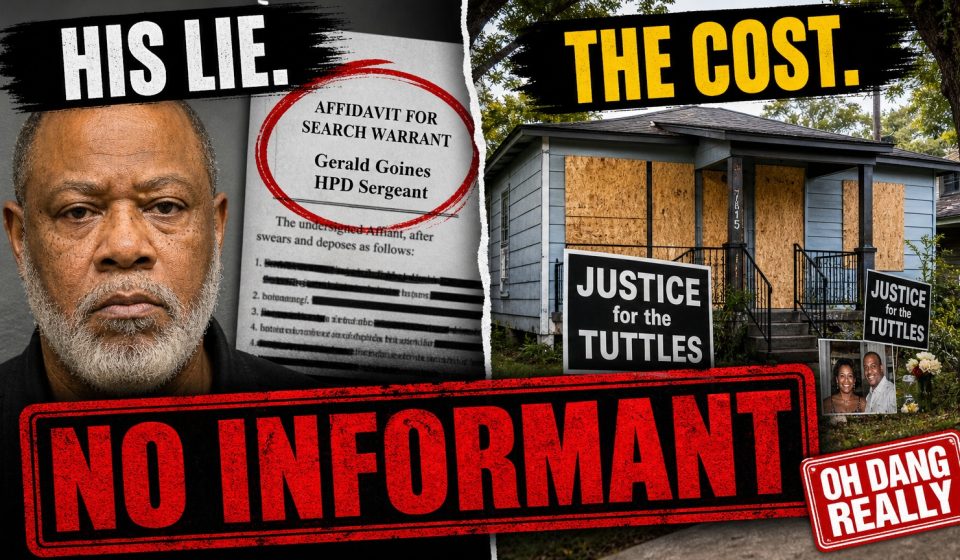
The no-knock raid at 7815 Harding Street was built on a drug buy that never happened — and the Houston narcotics sergeant who wrote that warrant has now admitted it in federal court.
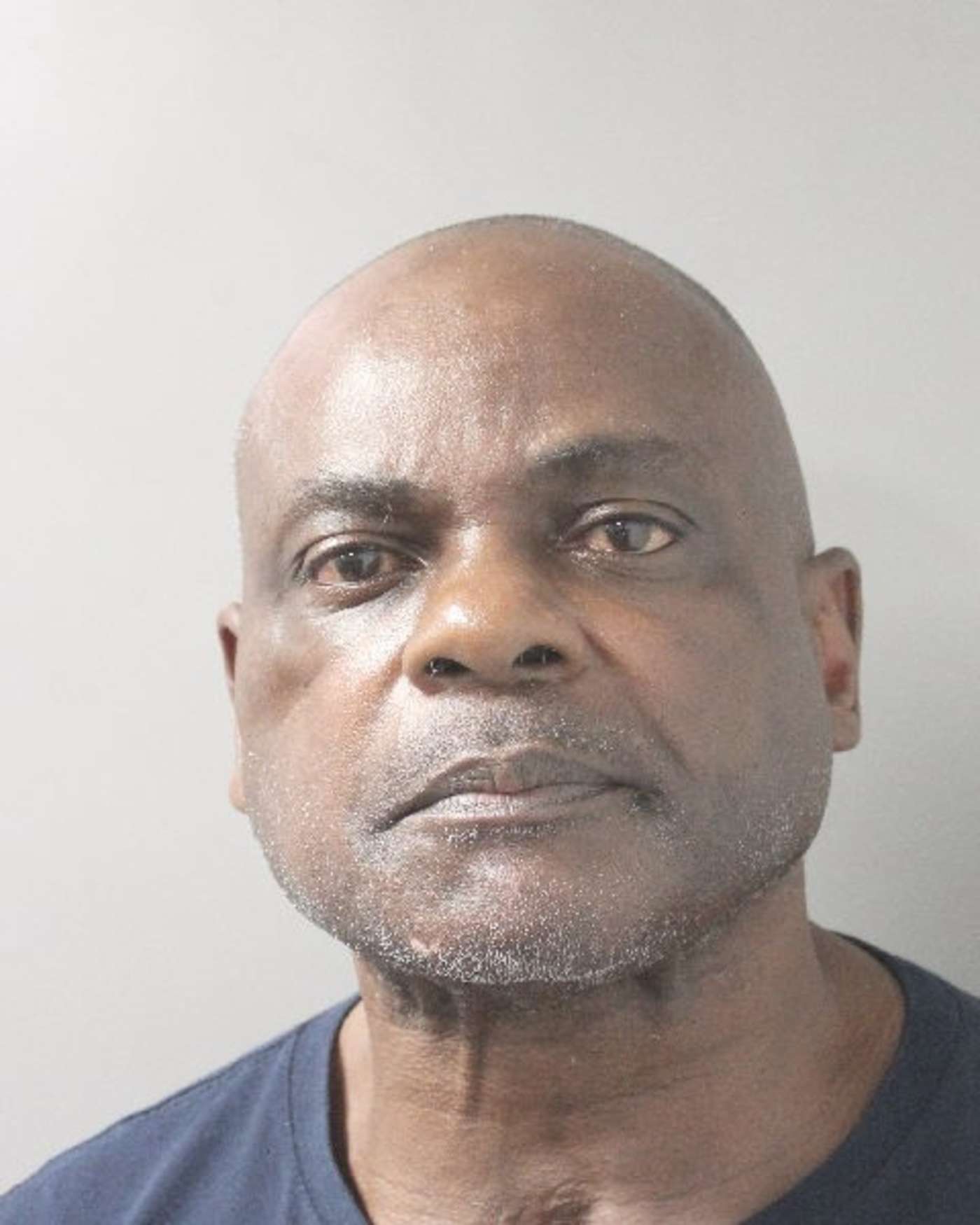
Gerald Goines spent decades as one of HPD’s most decorated narcotics officers. On August 28, 2026, the 59-year-old stood before Judge Andrew Hanks and pleaded guilty to two federal counts of depriving the Tuttles of their civil rights. Prosecutors say he invented an informant, invented a cash buy, and invented the crack cocaine that justified sending officers through that door on January 28, 2019.
What he admitted
There was no informant. There was no buy. Goines confessed he fabricated the entire basis of the search warrant — and once investigators pulled the thread, the cases of more than 30 other defendants collapsed behind it. The toxicology screen that was supposed to back his story? It came back negative for everything he claimed the couple bought.
Eighteen seconds
Texas Ranger David Wolf’s trial testimony laid out the breach in unforgiving detail — an eighteen-second timeline. The door was opened, the flashbang went in, and officers fired more than 40 rounds. Dennis Tuttle and Rhogena Nicholas lost their lives inside their own home. Their dog Star went down in the hallway. Five officers were hurt, and 53-year-old Felicity Kickbusch — a neighbor hit by a stray round — was paralyzed.
The reversal
Then-chief Art Acevedo spent his first press conference praising his officers. Within two weeks he stood in front of the cameras again and reversed himself completely, announcing the warrant was based on a lie. By 2024 a Harris County jury sentenced Goines to 60 years in the state case — he’d be about 90 before parole. His co-defendant Steven Bryant is still awaiting sentencing.
What happens November 9
The federal plea deal recommends just five years, with five other counts dismissed — but the sentence runs after his state time, and Judge Hanks is not bound by the recommendation. Goines remains in custody. The family’s civil suit against the city is still alive, and the question hanging over the courtroom is the one this case has asked since day one: how many other warrants carried the same lie?
The buy that became a legend
To understand why this plea took seven years to arrive, understand what the original warrant claimed. Goines’ paperwork described a confidential informant who walked up to the house, bought “fifty-dollar a gram, larger quantity” black tar heroin inside, and watched a woman weigh crack cocaine on a digital scale. None of it happened. There was no informant — Goines later admitted he copied the informant narrative from an entirely different case, a person who had never set foot on Harding Street. There was no buy. The DEA had told him weeks earlier the house checked out clean, and his own body camera recorded him claiming the opposite on the front lawn after the raid.
That recorded moment is the case in miniature: a veteran with decades of rewarded lies standing on a lawn, improvising justification for what had just happened, unaware the microphone was doing what informants weren’t — actually listening.
Two lives, two legal systems
Dennis Tuttle and Rhogena Nicholas were in their forties and fifties — he 49, she 46, her mother’s house, two dogs, nowhere to run. The entry team went in with weapons drawn, discharged 21 rounds, hit the couple and the dogs, and left two wounded officers in an exchange both sides lost. For years the civil side moved in parallel: the city settled with the families for $5 million, and — in a move Houston’s own mayor called justified — sent the $1 million settlement bill to Goines himself. The criminal side moved slower, as it always does: the state’s most serious charges tied to the raid came first, the federal civil-rights charges followed, and the two tracks ran on separate clocks.
The guilty plea is to the federal counts — two civil-rights deprivations. The state case remains out there, and that is the part to watch: federal exposure for Goines is measured in decades by agreement, but Texas has its own appetite for what happened in that living room, and no federal deal binds a state prosecutor who never signed it.
What this case bought the rest of us
The reforms are real and they carry names. Houston required independent review of warrants in most drug cases, ended most no-knock entries, and mandated body cameras stay rolling through warrant service — rules that exist because a police inventing an informant met a family of two. The Tuttle case, as attorneys for the family put it, is the reason every other family’s knock stays a knock. The victim here was never just the couple; it was the premise that a stranger’s sworn paperwork can send armed people through your door at 5 p.m. on a Monday.
Sentencing was set for a later date before Judge Hanks. Because the plea is binding as to federal time, the number everyone waits for is the state court’s answer — still pending as of this writing. This story will be updated.