
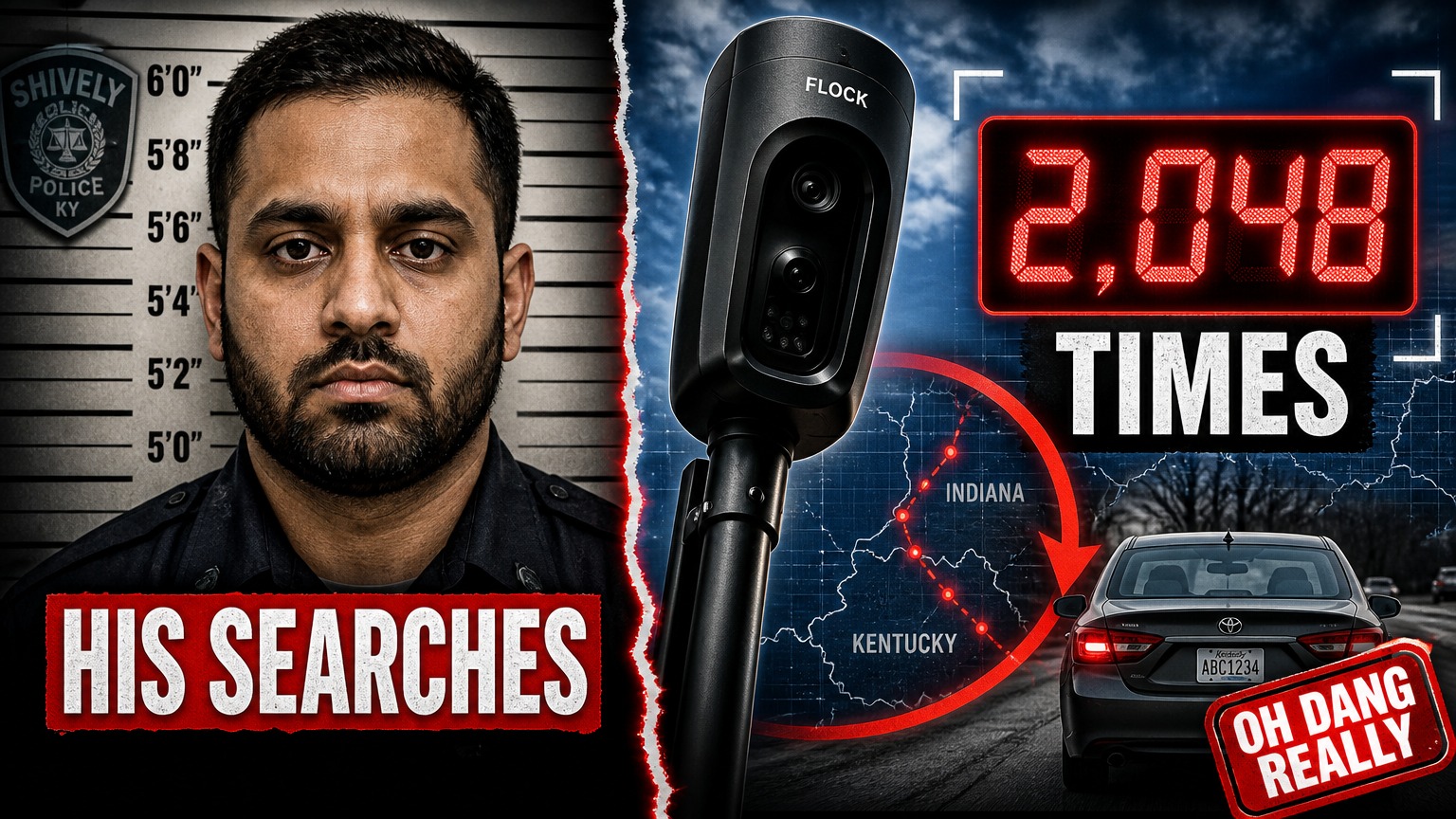
Police Officer Tracked His Ex 2,048 Times With License Plate Cameras

The search log read like a stakeout that never ended: 2,048 queries run through a Kentucky police department’s license plate camera network in four months, each one stamped with the same justification — a drug investigation that never existed. The person being tracked, police say, wasn’t a dealer. She was the mother of the officer’s child.
Shively Police Officer Asad Zahir, 40, is now charged with ten criminal counts after investigators say he used the city’s Flock automated license plate reader system to secretly follow two vehicles — both registered to a woman he once dated — across Kentucky and into Indiana. From January 1 through early May, the system mapped her commutes and every stop in between. And what caught him wasn’t a supervisor or an internal affairs probe. It was the camera company’s own audit software.
What the search log shows
Zahir had been a Shively patrol officer since 2022. Every Flock search requires an officer to enter a reason, and police say his reason was identical all 2,048 times: a drug or narcotics investigation. The woman he allegedly tracked had no criminal case — not one. The searches ran from January 1 through May 2, according to the department.
The protective order didn’t stop it
Police say the harassment wasn’t confined to a database. During those same months, investigators say Zahir harassed the woman and made threats — until she obtained a temporary protective order from an Indiana court. The order should have ended it. Instead, the searches continued: 241 of them while the order was active, between April 17 and May 6, according to the department.
The machine turned on him
On Monday, August 24, Flock’s new AI audit tool flagged Zahir’s search pattern as abnormal and cut his system access the same day. By Tuesday he was in custody — arrested at his own department.
The charges
The counts: five of official misconduct, five of unlawful access to a computer. Ten criminal charges, each tied to searches that were real, logged, and fabricated in purpose, police say.
The chief’s answer
The man at the podium was Chief Andre Bottoms, three weeks into the job and the first Black chief in Shively police history. “Charging this officer was not pleasant,” he said. “It was a gut punch for me personally.” But he drew a line: accountability “cannot depend on who you are and what position you hold or what badge you’re wearing.”
Hours after Zahir’s arraignment, the department announced an overhaul of its Flock rules — officer access under review, new search-approval requirements, and supervisory audits with compliance checks.
A pattern with a name
The Electronic Frontier Foundation says officers running surveillance on romantic partners is common enough that intelligence agencies have a term for it: LOVEINT — love intelligence. The Institute for Justice counts at least 47 officers disciplined for license plate reader abuse and calls that the tip of the iceberg, with the targets overwhelmingly women. Flock has since cut default data retention from 30 days to seven and made audits mandatory, while Tempe, Arizona canceled its contract the same week Zahir was arrested.
What happens next
At the August 28 arraignment in Jefferson District Court, Zahir never entered the courtroom — his attorney pleaded not guilty to all ten counts. The judge ordered no contact with the woman, released him without bond, and placed him on unpaid leave. He’s due back in court in October.
Every charge is an allegation right now. Zahir is presumed innocent unless and until proven guilty — the same standard his badge was supposed to represent. This post will be updated as the court record develops: the October hearing, any plea, and the department’s final policy text.
If an algorithm caught what no supervisor did in Shively — how many departments are still running cameras nobody audits at all?
Sources
CNN · WLKY · WAVE 3 · WDRB · Louisville Public Media
☕ Support this desk — buy us a coffee · tips fund records requests and server time



Every story like this starts the same way: someone typed a name, a plate, an address — and the databases already had it. Yours does too. Optery shows you exactly which sites are selling your personal info and scrubs you off them automatically. Free scan, paid plans do the removal. We earn a commission if you sign up — it costs you nothing extra.