
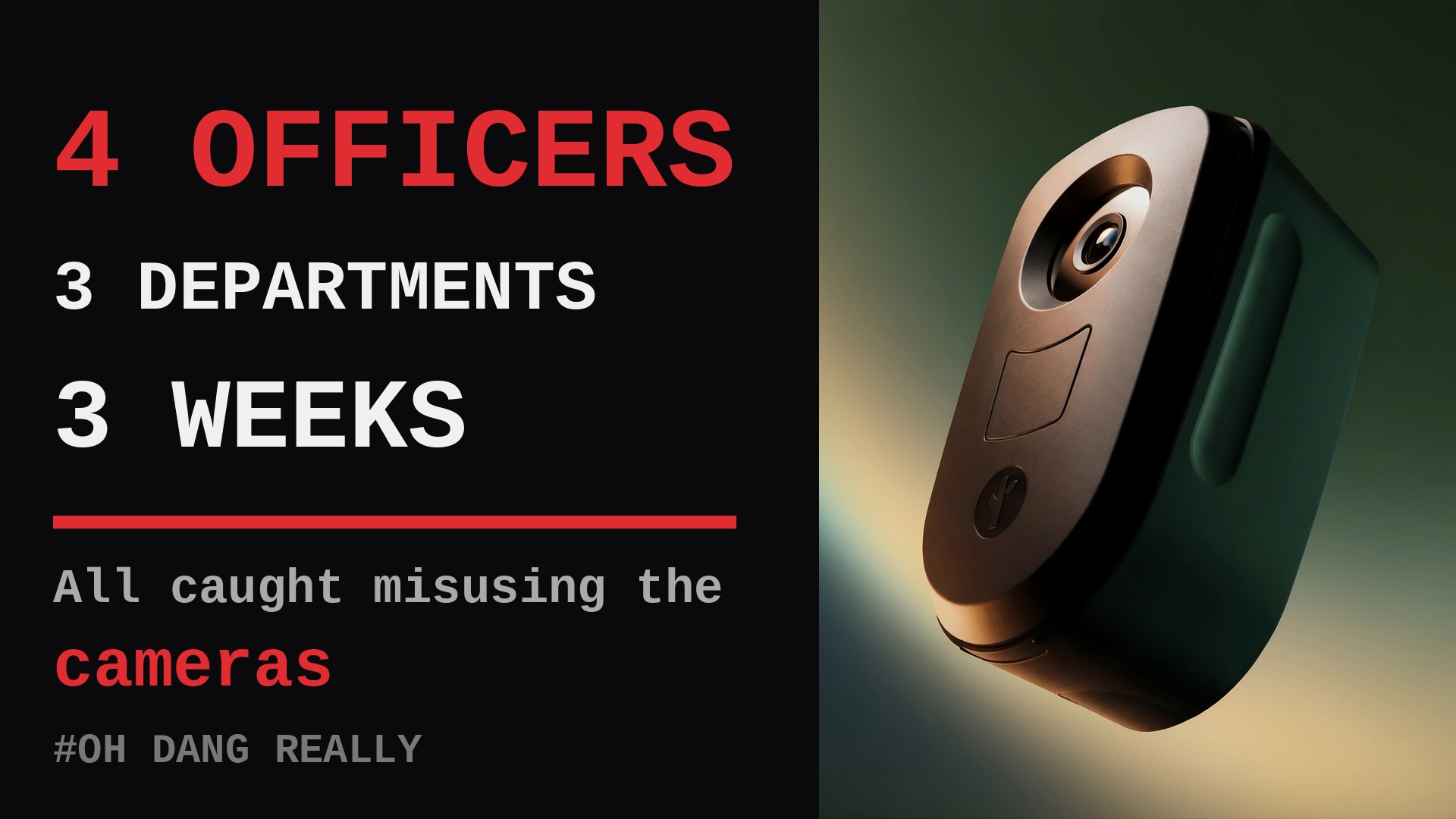

A woman in Massachusetts changed her identity to escape her old life — investigators say a police detective found her anyway, running her plate through a web of automatic license plate cameras at least five times, then searching her again in a federal law enforcement database. He is one of four Massachusetts officers accused of misusing Flock cameras in roughly three weeks. Not one of them was caught by a supervisor. The searches surfaced through an audit tool built by the camera company itself.
What happened
It started in New Bedford, where a woman told a judge at an abuse prevention hearing that an officer she once dated was using police cameras to track her. He denied it; the department checked anyway. An internal audit flagged his searches on July 31, and he was moved to desk duty the next day. On August 11, Police Chief Jason Thody suspended New Bedford’s entire Flock network, after the investigation reported a “personal connection between the officer and an individual associated with a license plate that had been searched.”
In Lynn, the department switched on Audit Assist — a misuse-detection tool built by Flock itself — and within a week it flagged two officers over what police called “a concerning pattern in some searches.” Both are on paid administrative leave while internal affairs digs through every search they ever ran.
In Stow, the accused officer is named: Detective Jason Rogers, facing a criminal complaint alleging he ran the plate of a woman who had changed her identity at least five times, then searched her through CJIS, the FBI’s criminal justice database. He has been on unpaid leave since July 31.
The numbers
The Boston Globe, tallying the cases in late August, noted it was “the third time in a week” that Massachusetts officers were caught misusing Flock. The running count: at least four officers under investigation across three departments, one citywide camera network switched off, and a pile of canceled contracts.
East Bridgewater canceled its contract outright. Hopkinton terminated its agreement and ordered every camera down by September 30, after the town’s lawyers found the contract violated state law. Grafton deactivated its twelve cameras after barely a month of use. Littleton cut ties, and Stow shut down its Flock program entirely.
The pattern
Flock cameras log every plate that passes — location, time, direction — building a searchable history of where any car has been. The thread running through these cases is officers allegedly typing in plates tied to people they knew: a former partner in New Bedford, a woman hiding from her past in Stow, an unexplained pattern in Lynn. Flock’s position is that officers should only search plates tied to real cases.
The public noticed. Marchers in New Bedford carried “get the Flock out” signs, a second march followed within days, and a City Council meeting on the cameras’ future collapsed into chaos. The ACLU says more than twenty-five Massachusetts municipalities are now demanding community control over surveillance.
And the detail that should worry every town with cameras on its poles: no supervisor caught any of this. No internal oversight unit did either. The camera company’s own audit software did.
What happens next
Rogers’ termination hearing was set for August 26. Lynn’s internal investigation continues. New Bedford has not said whether its network comes back on. Hopkinton’s cameras are due down by the end of September.
Every accusation in these cases is just that — an accusation — and each officer is presumed innocent unless and until proven guilty, the same standard those badges represent. This post will be updated as outcomes land: hearing results, internal affairs findings, and whether more Massachusetts towns pull the plugs.
If it took the camera company’s own audit tool to catch four officers — who was supposed to be watching the watchers?
Sources
WCVB · The Boston Globe · NBC Boston · WHDH · CBS Boston · Boston.com · Boston 25 · Turnto10 (WJAR) · New Bedford Guide
☕ Support this desk — buy us a coffee · tips fund records requests and server time



Every story like this starts the same way: someone typed a name, a plate, an address — and the databases already had it. Yours does too. Optery shows you exactly which sites are selling your personal info and scrubs you off them automatically. Free scan, paid plans do the removal. We earn a commission if you sign up — it costs you nothing extra.