FHP Trooper Alain Fernandez Fed Flock Data To A Fleeing Suspect Then The Case Vanished

A Florida Highway Patrol trooper spent three years feeding police data out the back door — and the trail only surfaced because an Alabama detective cracked open a fake cop’s phone.
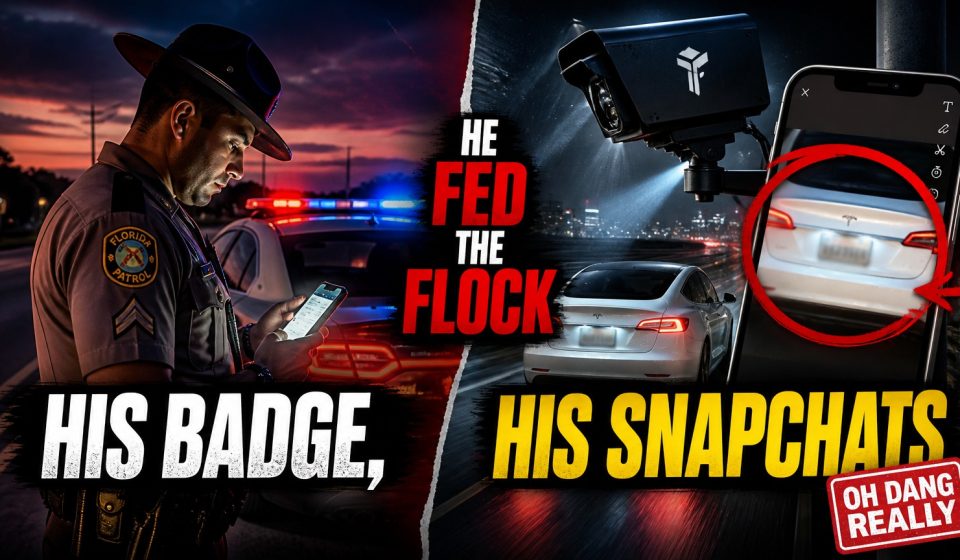
Alain Fernandez was a 15-year FHP veteran stationed in Fort Pierce. On September 9, he was arrested on three third-degree felonies for offenses against computer users — and by the end of that same day, Florida Highway Patrol had fired him. According to the FDLE affidavit, Fernandez ran more than 22 unauthorized searches through police databases between 2022 and 2025: driver license photos, home addresses, vehicle records, even medical records. Then he sent them out — by text and Snapchat — to about a dozen people. When the system demanded a reason for each search, the affidavit says he simply typed one in: “Traffic Related Injury.” “Court Purposes.” Whatever fit.
The case broke open in Attalla, Alabama, where officers pulled over Nathan Novotny — a fake cop driving a black Charger equipped with lights, sirens and radar. His phone held a year of conversations with a real officer. The detective ran one query to Florida and, per the affidavit, got a driver license photo back within a single minute. One recovered message sums up the pipeline: “U didn’t get that pic from me.”
But the wildest chapter involves a white Tesla. In September 2025, a Tesla Model 3 led a Martin County sergeant on a pursuit approaching 140 mph, rammed his cruiser and vanished — the driver never identified. The car was registered to Khaled Turkustani of Port St. Lucie. According to the affidavit, in the very same window Fernandez wrote Turkustani four citations — telling the court he had positively identified him as the driver — while simultaneously Snapchatting Turkustani Flock camera screenshots of Turkustani’s own car, warning him the vehicle was hot-listed and warrants were coming. All four citations were later dismissed. Turkustani was arrested in February 2026, partly on the strength of that trooper’s identification — and three weeks later, prosecutors filed a document that says “No Information.” The case was gone, no reason given. The Tesla’s own cameras could have settled who was actually behind the wheel, but investigators found that all of the footage had been erased. Nobody can say who did it, or when.
Governor Ron DeSantis called it “unacceptable and a clear abuse of power.” FDLE, for its part, told reporters the leaks were not meant to obstruct any case — favors for friends, ego, entertainment; the affidavit never fully explains the why. Which leaves the uncomfortable question hanging over the whole story: 22 runs, three years, a dozen recipients. Who exactly was checking the checker? Every driver in America now passes cameras that are logged, searchable, and one bad badge away from walking out the back door.
Sources: WSVN, WPBF, CBS12, Yahoo/MotorBiscuit.FDLE affidavit (State of Florida v. Alain Fernandez).
Every story like this starts the same way: someone typed a name, a plate, an address — and the databases already had it. Yours does too. Optery shows you exactly which sites are selling your personal info and scrubs you off them automatically. Free scan, paid plans do the removal. We earn a commission if you sign up — it costs you nothing extra.