
Watch the video:
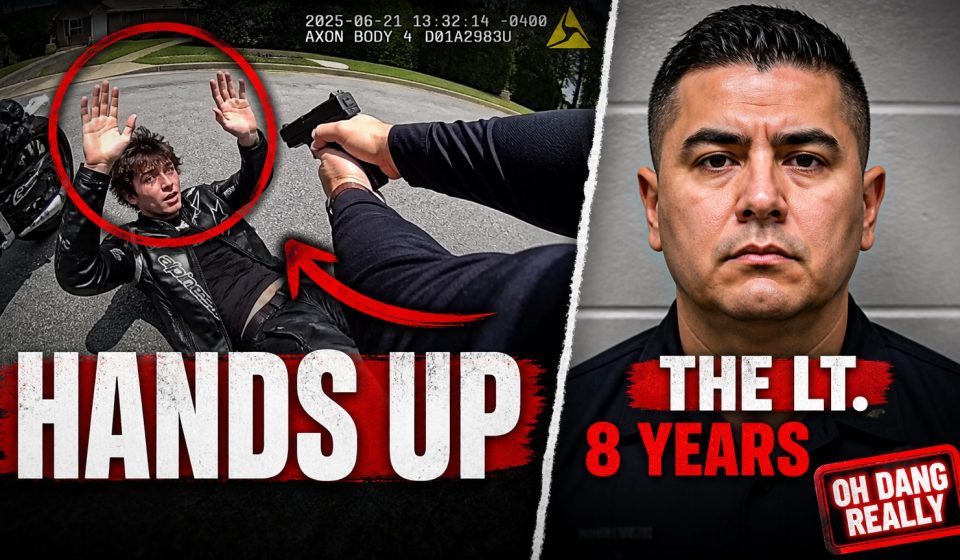
The final minute of Camden Childers’ life played out on an officer’s own camera: a 21-year-old climbing off a motorcycle, hands rising, apologizing, getting on the ground as ordered — and then a police lieutenant kicking him flat and firing one round into his chest. On September 9, 2026, the lieutenant who did it was sentenced to prison.
Carlos Uribe, at the time a lieutenant with the Newton Police Department in North Carolina, pleaded guilty in June to a reduced second-degree count and received 94 to 125 months — roughly eight to ten and a half years. The family left the courthouse saying it out loud: not enough.
How the night ended in a cul-de-sac
It began as a traffic matter. Officers say Childers was riding recklessly with no plate on the night of June 26, 2025, and when they tried to stop him, he ran — leading two other departments on chases before Newton joined in. The pursuit ended in a quiet cul-de-sac in Conover, a neighborhood full of families asleep.
Then the camera recorded the part that changed everything. Childers climbed off the bike with his hands rising, telling the officers he was sorry. He got on the ground because they ordered him to. The State Bureau of Investigation would later confirm the obvious: at that moment, he was no longer a threat to anyone.
Uribe kicked him in the chest, knocked him flat, and fired one round into it — with another lieutenant’s camera rolling the entire time. Twenty-one years old, face-down, hands behind his back. The question that has followed this case everywhere it goes is the one prosecutors put in front of a grand jury: what threat is left?
The system actually moved
Credit where the record shows it: the machinery did not protect him. On July 22, 2025 — under a month after the cul-de-sac — a grand jury indicted Uribe on the state’s most serious charge, with bond set at $100,000. Newton’s chief didn’t wait for a verdict; Vidal Sipe fired him on August 19, 2025, while the case was still pending. And in June 2026, the top count — the one that could have carried life — went away in exchange for the guilty plea to the reduced count.
That is the deal that brought everyone to a two-day sentencing hearing in September. The defense’s whole case for leniency rested on the chase: Childers had already run from two departments that night, and the state’s own pursuit policy was part of how the night ended where it ended. The DA pushed back, pressing for active prison time and fighting the lighter alternative. The question underneath all of it: does a wild chase change what happened in that cul-de-sac?
What the camera changed
Every step that followed traces back to the recording. The State Bureau of Investigation took the case because another agency’s officer was the shooter — the standard conflict move that removes local polish from the file. SBI agents reviewed the footage, and their published finding matched what anyone watching could see: a man compliant, on the ground, and out of the fight before the kick landed. None of the disputes that usually dog these cases — dueling witness accounts, conflicting radio traffic, a gap in the recording — existed here. The camera was running, and it was a colleague’s.
That matters for what the family gets. In officer-involved cases without video, the record ends up being testimony about testimony. Here, the record is the thing itself, played twice in open court, entered in a plea file a judge signed, and carried home in the memory of a courtroom full of people wearing a dead man’s name.
The shirts
The detail that hit hardest came before any number was read. Camden’s family sat in that courtroom wearing matching shirts with his name on them — and then watched the officer-worn video for the first time in their lives, in front of the man who fired. Imagine holding your son’s name on your chest while it plays on a courtroom screen.
The judge’s decision came down to six numbers: 94 to 125 months. Do the math and it lands where the family says it lands — about eight years served before parole even comes up, a sentence that could end before the year 2035, for a surrender that was recorded and still happened. The family’s position as they walked out: a surrendering twenty-one-year-old was worth more than that.
It is not an isolated pattern, either. A South Carolina corporal was charged after his own body-worn camera showed him firing on a hands-up coworker, and an ex-Arizona officer drew three life sentences in a different case entirely. The cameras keep proving what defenders said they would disprove.
Uribe remains in the state’s custody system serving his sentence. Because the conviction came by plea, the appellate road is narrow — and the civil suit the family files, if they file one, will be the next time this case sees a courtroom.
Uribe pleaded guilty, which is a conviction; the facts above come from court proceedings, prosecutors and investigators. Statements about intent reflect prosecution and SBI findings on the record.
☕ Support this desk — buy us a coffee · tips fund records requests and server time